Open to opportunities & collaborations
Research · Engineering · Data & AI · Software
Milad
Tatar Mamaghani
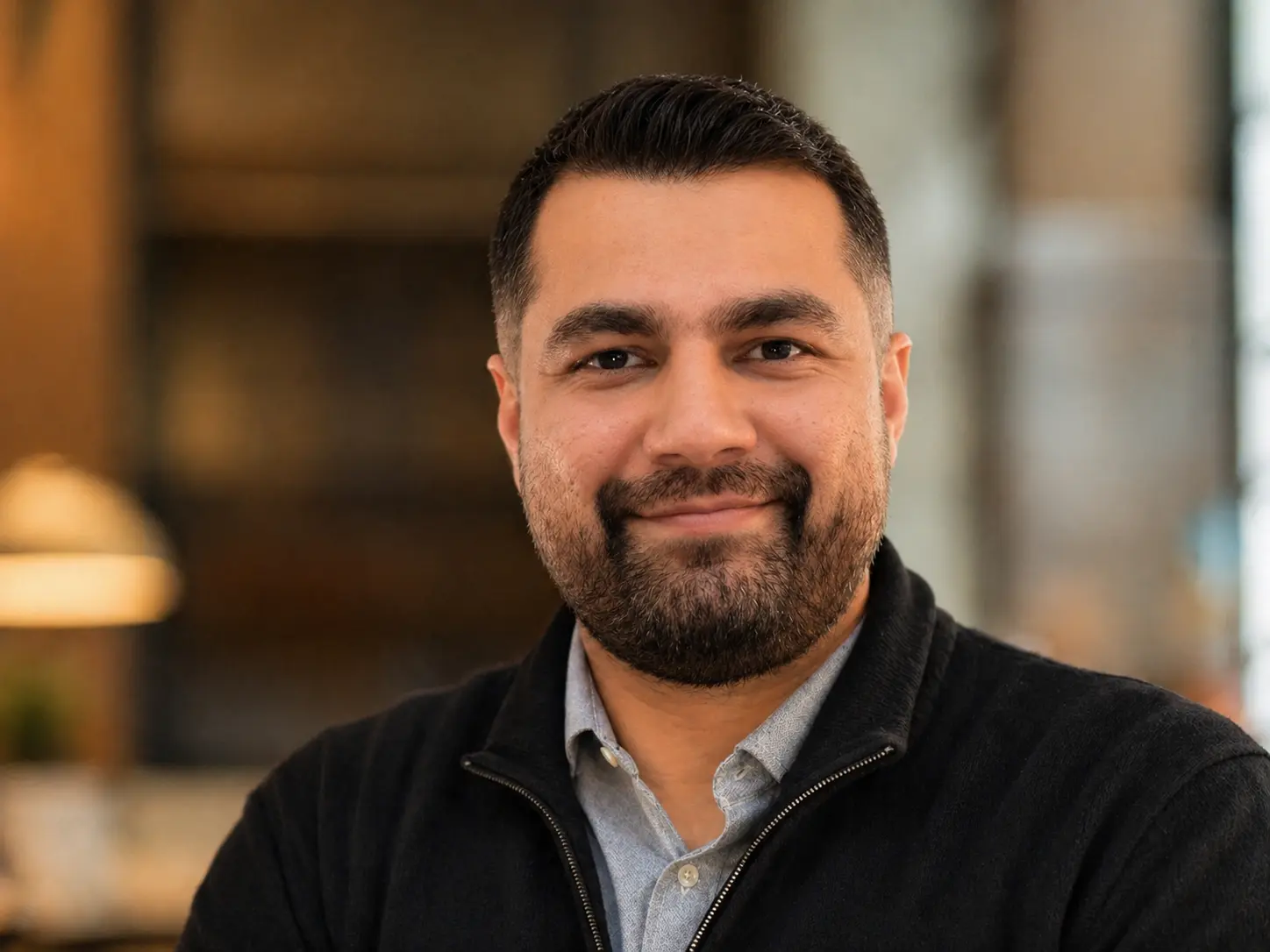
Research scientist and engineer working across wireless systems, data science, applied AI, and software development.
What I work on
A connected set of skills.
Ask. Model. Discover.
Wireless systems, secure communications, and the ideas behind intelligent networks.
Research interests 02 / EngineeringDesign. Simulate. Test.
Signal processing, optimization, and simulation to explore real engineering trade-offs.
Engineering work 03 / Data & AIFind patterns. Build models.
Data analytics, machine learning, computer vision, and intelligent automation.
Applied AI projects 04 / SoftwareTurn ideas into tools.
Research code, fintech tools, and applications built to make complex tasks simpler.
Software projectsSelected work
Ideas, put into practice.
InvestIQ — AI Portfolio Tracker
InvestIQ: Self-hosted investment portfolio tracker with broker/crypto imports, AUD/USD reporting, tax-aware analytics, live market data, and AI-assisted portfolio insights.
Explore code for Investment-Portfolio-TrackerImage Classification
This project implements and benchmarks convolutional neural networks for two image-classification tasks using TensorFlow/Keras.
Explore code for CNN-Image-ClasificationIntegrated Sensing and Communications
MATLAB simulation code for "Securing ISAC Against a Mobile Adversary: A Stackelberg Game With DRL" — IEEE JSAC 2026
Explore code for SecureISAC-UAV-DRLAbout Me
I’m Milad, originally from Mamaqan, a town near Tabriz in northwestern Iran, and now based in Sydney, Australia. I completed my Ph.D. in Electrical Engineering at Monash University and later worked as a Postdoctoral Research Fellow at the Australian National University.
My work sits at the intersection of research, engineering, data science, and software development. In wireless communications, I have worked on physical-layer security, non-terrestrial networks, integrated sensing and communications, MIMO beamforming, reconfigurable intelligent surfaces, and resource allocation for beyond-5G and 6G networks. I draw on signal processing, optimization, and simulation to understand complex systems, evaluate design trade-offs, and develop practical solutions.
I also work with data analytics, machine learning, and applied AI, with interests spanning reinforcement learning, computer vision, and intelligent automation. I use Python, MATLAB, and scientific computing tools to explore data, build models, and test ideas. My software interests extend from research code and simulation frameworks to AI tools, fintech projects, and consumer applications. I enjoy turning complex technical ideas into software that is useful, testable, and clear to work with.
Alongside technical work, I have taught engineering and computing subjects, supervised student projects, and contributed as a reviewer, technical program committee member, and conference session chair. I value collaboration across disciplines and enjoy connecting analytical thinking with hands-on development. Outside work, I enjoy hiking, swimming, and overthinking my next chess moves.
Education


Featured Publications
Core Skills
News
Jun 2026
📚 Our new work on ISAC submitted to IEEE TWC.
Apr 2026
🚀 Personal website relaunched.
Mar 2026
📚 Our new work submitted to IEEE TCOM.
Oct 2025
📚 Our IoT-J paper featured in IEEE ComSoc Best Readings
Sep 2025
📚 Our paper published in IEEE JSAC
2024
🇦🇺 Received Australian Global Talent.
Jun 2024
🏆 Received Best Paper Award at IEEE ICC 2024.
Sep 2024
🏆 Received Best Paper Award by IEEE ComSoc SPCC Technical Committee.