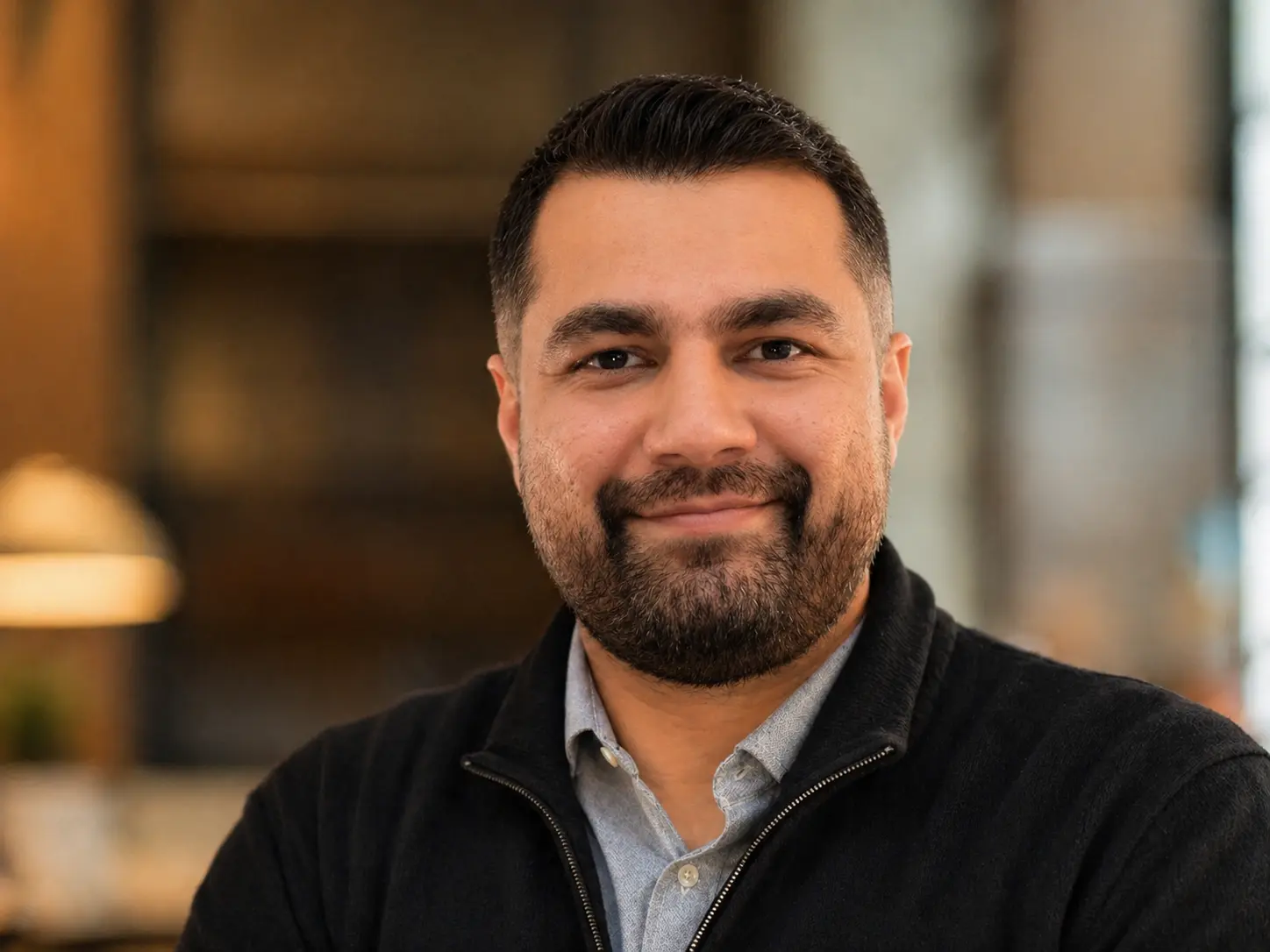
My research aims to develop AI-native wireless systems for 6G and beyond that are reliable, secure, energy-efficient, and capable of supporting future digital infrastructure with broad societal and economic impact. I work at the intersection of information theory, estimation theory, statistical signal processing, optimization, and machine learning to understand the fundamental trade-offs between reliability, latency, security, sensing, and environmental awareness in emerging networks. My goal is to bridge rigorous model-based design with data-driven intelligence, enabling wireless systems that can adapt to complex environments, resist adversarial disruption, and support high-impact applications such as autonomous systems, smart cities, critical infrastructure, remote connectivity, and next-generation mobile services. Current directions include integrated sensing and communications, reconfigurable intelligent surfaces, non-terrestrial networks, finite-blocklength secure communications, and learning-driven network control using reinforcement learning, generative models, and foundation-model-based approaches.
Published in IEEE Transactions on Wireless Communications, 2024
M. Tatar Mamaghani, X. Zhou, N. Yang, A. L. Swindlehurst, and H. V. Poor, "Performance analysis of finite blocklength transmissions over wiretap fading channels: An average information leakage perspective," IEEE Trans. Wireless Commun., vol. 23, no. 10, pp. 13252–13266, Oct. 2024.
DOI PDF arXiv Code
Published in 2024 IEEE International Conference on Communications (ICC), 2024
M. Tatar Mamaghani, X. Zhou, N. Yang, A. L. Swindlehurst, and H. V. Poor, "On the information leakage performance of secure finite blocklength transmissions over Rayleigh fading channels," in ICC 2024 - IEEE International Conference on Communications, Denver, CO, USA, pp. 1467–1472, Jun. 2024.
DOI arXiv
Published in IEEE Global Communications Conference (GLOBECOM), Kuala Lumpur, Malaysia, 2023
M. Tatar Mamaghani, X. Zhou, N. Yang, and A. L. Swindlehurst, "Secure short-packet transmission with aerial relaying: Blocklength and trajectory co-design," in Proc. IEEE GLOBECOM, Kuala Lumpur, Malaysia, pp. 5998–6004, Dec. 2023.
DOI arXiv
Published in IEEE Global Communications Conference (GLOBECOM), Singapore, 2017
M. Tatar Mamaghani, A. Mohammadi, P. Yeoh, and A. Kuhestani, "Secure two-way communication via a wireless-powered untrusted relay and friendly jammer," in Proc. IEEE GLOBECOM, Singapore, pp. 1–6, Dec. 2017.
DOI arXiv